
Lynred — formed from the merger of ULIS and Sofradir — supplies uncooled microbolometer arrays that power a large share of European thermal modules: handheld thermography cameras, thermal weapons sights, driver vision enhancers, and industrial monitoring cores. The 384×288 and 640×512 formats have been the workhorses of that ecosystem for years, with 256×192 entering compact consumer and prosumer optics, and 1280×1024 large-format arrays following the same path. Pixel pitches run from 17 µm down to 6 µm across the range.
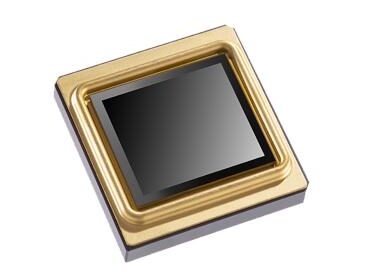
If your module is built around a Lynred or ULIS-format detector, the right KUYANG shutter is determined by two numbers: the array’s active area and the space your core leaves for the shutter. This guide shows how to match them.
Step 1: Calculate the Active Area
Active area = array size × pixel pitch. Approximate values, in millimeters:
| Pixel Pitch | 256×192 | 384×288 | 640×512 | 1280×1024 |
|---|---|---|---|---|
| 17 µm | 4.4 × 3.3 | 6.5 × 4.9 | 10.9 × 8.7 | — |
| 12 µm | 3.1 × 2.3 | 4.6 × 3.5 | 7.7 × 6.1 | 15.4 × 12.3 |
| 10 µm | 2.6 × 1.9 | 3.8 × 2.9 | 6.4 × 5.1 | 12.8 × 10.2 |
| 8 µm | 2.0 × 1.5 | 3.1 × 2.3 | 5.1 × 4.1 | 10.2 × 8.2 |
| 6 µm | 1.5 × 1.2 | 2.3 × 1.7 | 3.8 × 3.1 | 7.7 × 6.1 |
The shutter’s aperture size must clear the active area with margin for positioning tolerance — but not so much margin that it wastes space in a core designed to be small.
Step 2: Match the KUYANG Series
KUYANG standard shutters are tooled around these same active areas:
| Detector Format & Pitch | Recommended Series | Frame Size | Aperture size | Note |
|---|---|---|---|---|
| 256×192 (17 / 12 / 10 / 8 / 6 µm) | Micro | 13×13×3.46 mm | 7.7×6.55 mm | One part covers the entire 256×192 family |
| 384×288 (17 / 12 / 10 / 8 / 6 µm) | Micro | 17.3×17.3×3.7 mm | 9.8×8.6 mm | Full pitch range fits the same micro frame |
| 640×512 @ 17 µm | Compact series | 26×26×4.05 mm | 15.5×13.5 mm | Aperture clears the 10.9×8.7 mm active area |
| 640×512 @ 12 / 10 µm | Ultra-slim | 23.4×23.4×3.7 mm | 14×11.5 mm | Comfortable margin for both pitches |
| 640×512 @ 8 / 6 µm | Ultra-slim | 17.3×13×3.46 mm | 9.8×8.6 mm | Lightest option for weight-sensitive builds |
| 1280×1024 @ 17/12 µm | Compact Series | 32×32×4.8 mm | 22×18 mm | Clears the 15.4×12.3 mm active area |
| 1280×1024 @ 10 µm | Compact series | 27.8×27.8×5 mm | 18×15.6 mm | Comfortable margin (12.8×10.2 mm active) |
| 1280×1024 @ 8 µm | Compact series | 26×26×4.05 mm | 15.5×13.5 mm | Ultra-slim 21×21 also fits (11.1×9.8 mm) |
| 1280×1024 @ 6 µm | Micro | 17.3×17.3×3.7 mm | 9.8×8.6 mm | Active area is only 7.7×6.1 mm at this pitch |
The same two patterns hold as for other detector brands: the 13×13 mm micro shutter and the 17.3×17.3 mm micro shutter covers 256×192 and 384×288 at every pitch, plus 640×512 and even 1280×1024 at the fine 8 µm and 6 µm pitches; the 32×32 mm compact shutter and the 27.8×27.8 mm compact shutter are the frame to reserve for large-format 1280×1024 arrays at 12 µm and 10 µm.
Step 3: Confirm the Space Envelope
European thermal modules are typically built tight, so envelope checks matter as much as aperture checks.
- Thickness. Micro series: 3.46 mm. Ultra-slim series: 3.5 mm. Both fit cores where the distance between lens flange and detector window is measured in millimeters.
- Footprint. The 13×13, 21×21, and 26×26 mm frames are standard PCB envelopes — if your layout already reserves one of them, the shutter drops in without board changes.
- Electrical interface. Every series ships with flying leads or an integrated FPC. The FPC option is the usual choice in compact European designs, because it removes wire routing from the optical cavity.
Calibration Performance
The shutter’s job in a Lynred-based core is identical to any other: present a uniform dark reference for non-uniformity correction. Two KUYANG details protect that reference over the product’s life:
- In-house coated blades. The matte finish keeps emissivity even across the blade, so the calibration frame has no hot or cold zones.
- Repeatable blade stop. The blade lands on a defined stop every cycle, so the reference position — and therefore the correction — does not drift as the shutter ages.
For a deeper look at why the reference matters: What is NUC calibration? (1) & What is NUC calibration? (2) .
A Different Array or a Different Envelope? Send It Over
The matrix covers the mainstream Lynred formats and pitches. If your core runs a non-standard pitch, a cooled detector, or an unusual mechanical envelope, send us the detector specification. KUYANG engineering will confirm the closest standard model, or adjust the aperture and mounting on an existing tooled design — ODM/OEM drawings and 3D STEP models are provided at the quotation stage.
Related Reading
- Shutter for FLIR-Format Thermal Cores
- Window-Type Optical Shutters
- Swing-Type Optical Shutters
- Micro Shutter Series for WLP Detectors
Working with a Lynred core? Send your detector format and available space — we will confirm the fit and send drawings this week.
Web: www.ky-ele.com Email: kuma@ky-ele.com