
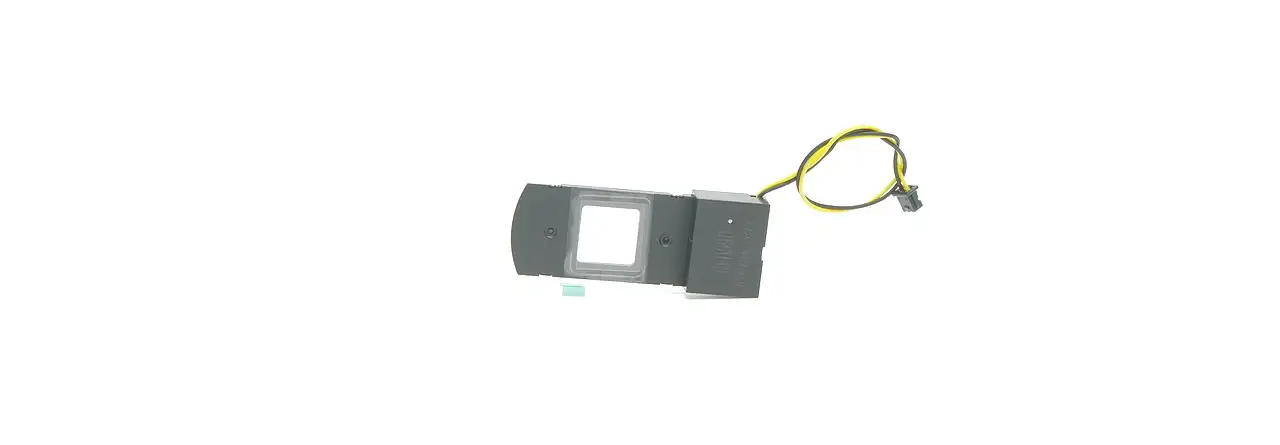
The P-Iris system comprises a P-Iris lens and specialized software in the camera. The software controls a motor in the P-Iris lens, enabling automatic and precise control of the iris. Unlike a DC-iris lens, the main task of the P-Iris control is not to continuously adjust the flow of light through the lens.
https://ky-ele.com/auto-iris/
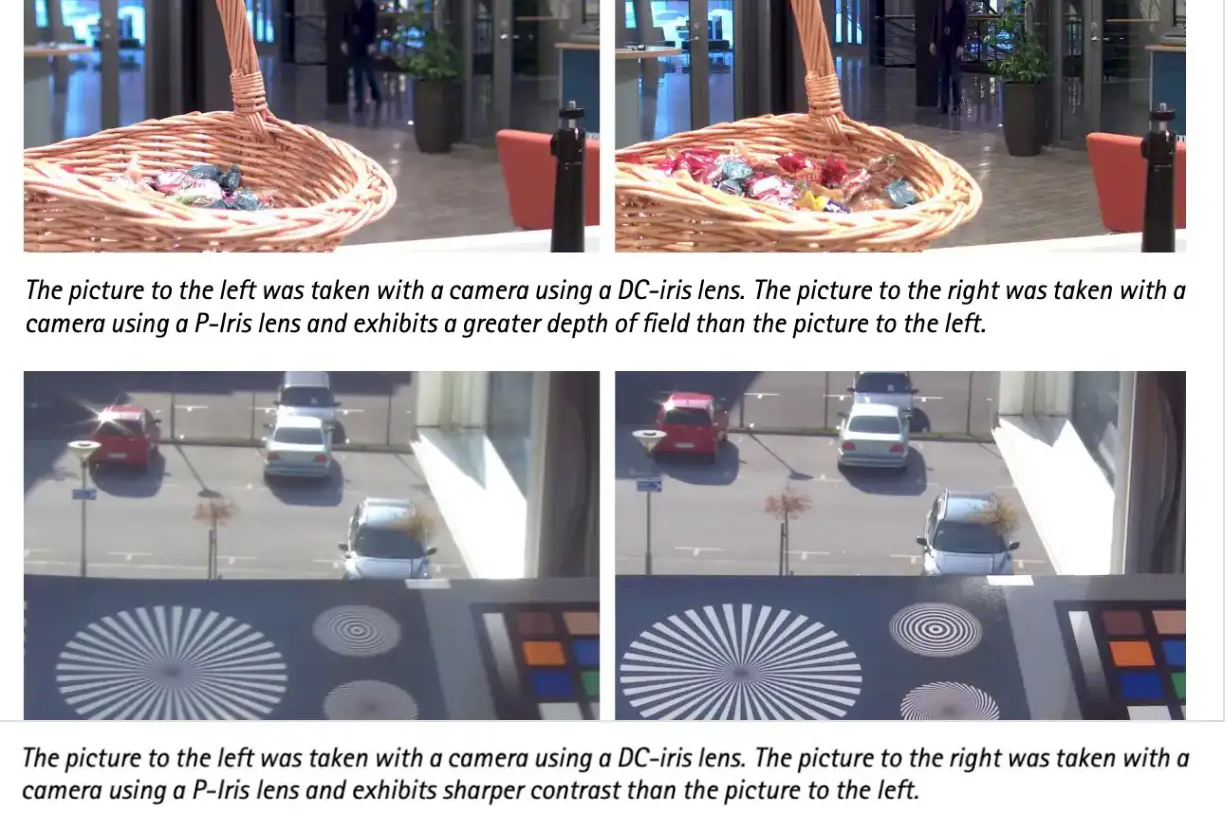
The primary objective of P-Iris is instead to improve image quality by enabling the optimal iris position to be set so that the central and best-performing part of the lens is used most of the time. This position, expressed as a specific f-number, is where the lens performs optimally, where many optical errors are reduced, and where image quality (with regards to contrast, resolution, and depth of field) is the best. This is the default setting in a network camera with P-Iris.
Working in conjunction with P-Iris is the use of electronic means—gain (amplification of the signal level) and exposure time—to manage slight changes in lighting conditions and to further optimize an image.
This allows the optimal iris position to be maintained as long as possible. In situations when the preferred iris position and the camera’s electronic processing capabilities cannot adequately correct the exposure, a P-Iris camera will automatically instruct the iris to move to a different position. In dark conditions, for example, the iris will fully open. In bright situations, a camera with P-Iris is programmed to limit the closing of the iris to a position that avoids diffraction or blurring. Hence, in all lighting conditions, P-Iris can automatically make adjustments to deliver optimal image quality.
http://www.youtube.com/@KUYANG-Electronic/
Hope this video is helpful!
https://www.facebook.com/share/v/1APyEQk42a
Thank you.